


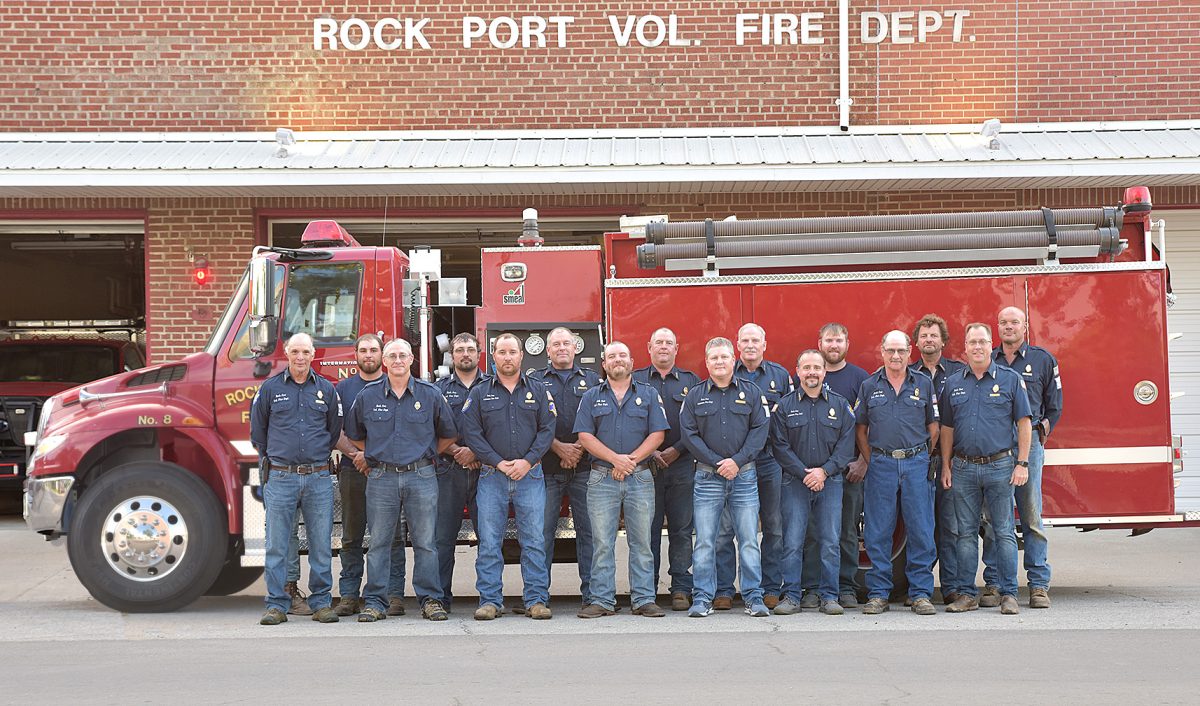
ROCK PORT VOLUNTEER FIRE DEPARTMENT
The Rock Port Volunteer Fire Department, from left to right, includes: front row – Steve Shineman, Eric Abbott, Trent Shineman (2nd Assistant), Drake Daugherty, Mark Bennington, Jason Watkins (Secretary/Treasurer), Greg Groff, and W.C. Farmer; and back row – Jacob McKenney, Kyle Driskell, Mike Daugherty, Chad Schomburg, Scott Jones (Chief), Stephen Schniedermeyer, Chad Ottmann (1st Assistant), and Dan Athen. Firemen not pictured are Treyton Lewis, Cory Jones, Alan Lager, and Kory Paris.
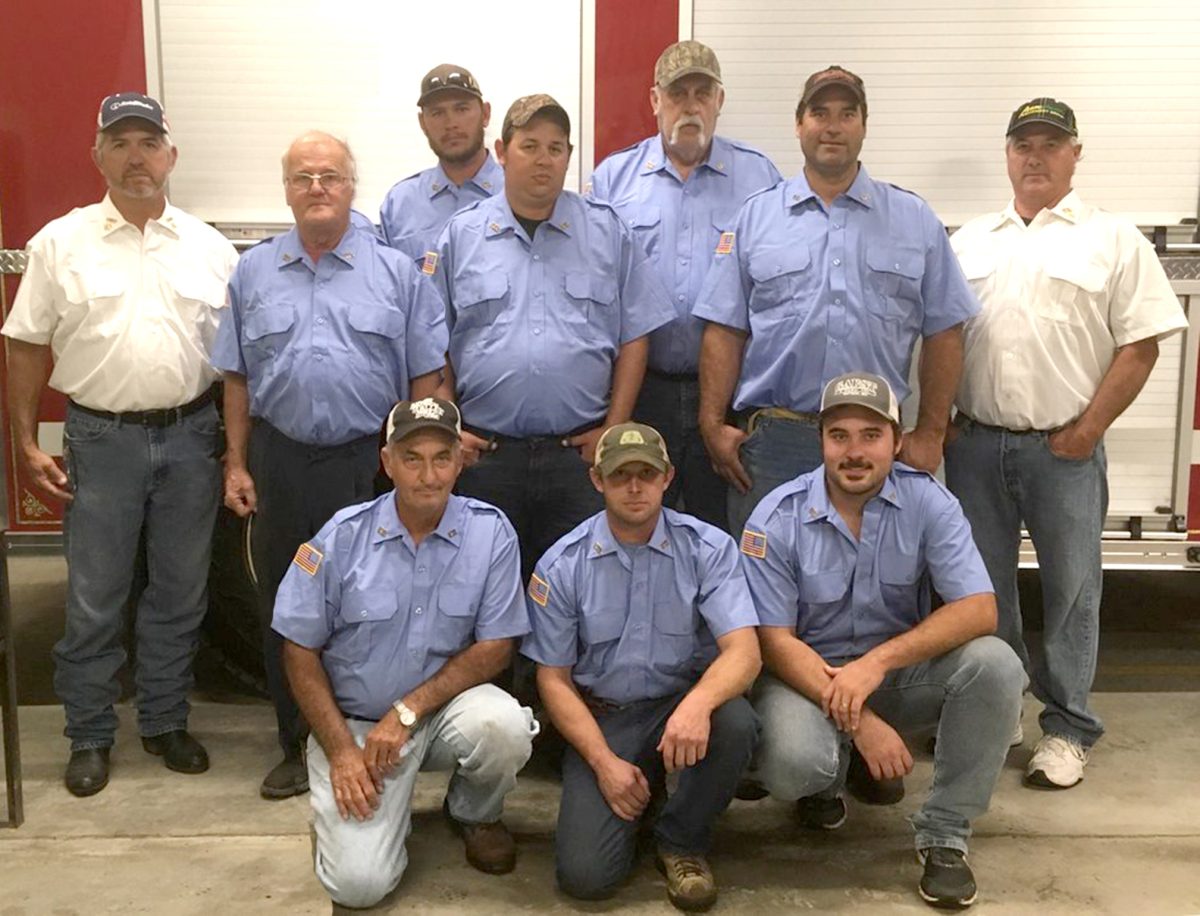
WATSON VOLUNTEER FIRE DEPARTMENT
The Watson Volunteer Fire Department, from left to right, includes: front row – Tim Whelan, Chance Esser, and Trey Garst; middle row – Rod Meinders, Jacob Gibson, and Seth Gaines (Secretary/Treasurer); and back row – Tom Gibson, Jr. (Chief), Cody Gibson, D.J. Thompson, and Jody Ellison (Assistant Chief). Firemen not pictured are Andy Spiegel, Jason Garst, and Tom Robinson.
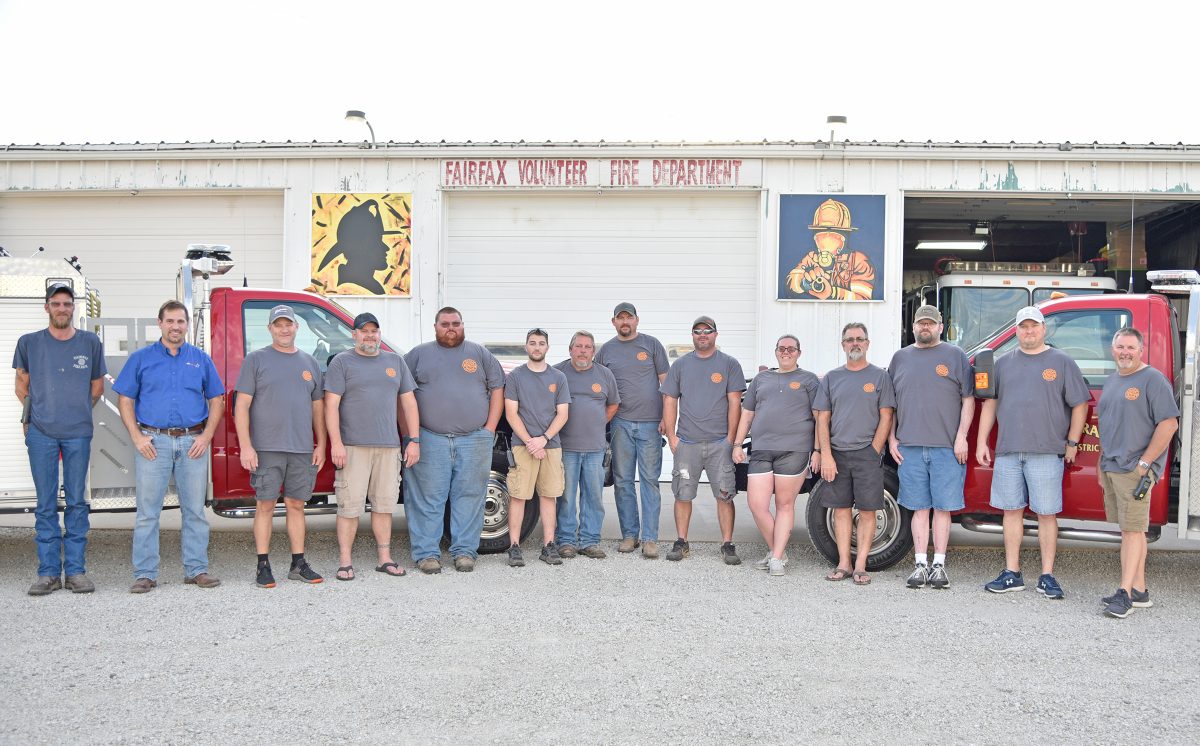
FAIRFAX VOLUNTEER FIRE DEPARTMENT
The Fairfax Volunteer Fire Department includes, from left to right: Brandon Reed, Dru Oswald, Steve Stevens, Dee Duering (Chief), Benny Stark, Trevor Brown, Archie Agnew (Fleet Manager), Matt Auwarter, Brett Johnson (1st Assistant Chief), Erica Auwarter (Secretary), Rick Kemerling (Treasurer), Cole Simmons (President), Cody Helfers, and John Brown (2nd Assistant Chief).

TARKIO VOLUNTEER FIRE DEPARTMENT
The Tarkio Volunteer Fire Department includes, from left to right: Shane Bredensteiner (Chief), Charles Bolin, Craig Vance (President), Tim Scott, Raymond Gebhards, Jr., Roger Aufenkamp, Jeff Agnew, Mike Shaw, Keaton Shaw (1st Assistant Chief), Brett Reeves (Vice-President), Deaven Tunnell, and Curtis Evans (Secretary/Treasurer). Firemen not pictured are Allen Wennihan (2nd Assistant Chief), Kevin Sundermann (Board Member At Large), Danny McCoy, Duane Umbarger, Harold Vander Plaats, Charlie Kirwan, John Driskell, Tommy Dow, Garrett Alsup (Training Officer), James Navin, Nic Schebaum, Kevin Bennett, and Jesse Bolin.

WESTBORO VOLUNTEER FIRE DEPARTMENT
The Westboro Volunteer Fire Department includes, from left to right: front row – Spencer Barnes, Mark Manchester (Secretary), Shane McNaughton, Jason Leseberg, Jeff Williams, Bryan Richards, and Bobby Vette (Fire Board member); and back row – Gary Bogenreif (Treasurer), Jeff Hall, Ronnie Bruce (Fire Chief), Slade McNaughton, Clint Hogue, Norbert Henry, Alan McNaughton (Fire Board member), and Jim Quimby. Firemen not pictured are Brian Peregrine, Justin Riggins, Mike Rolf, Shannon Wiley, Brett Barber, Chris Stevens (Assistant Chief), and John Strauch (Fire Board member).
Fire Prevention Week 2022 focuses on critical need to quickly escape your home when fires occur
While most Americans feel safest at home, research shows that three-quarters of fire deaths and injuries occur in our homes and that people are now more likely to die in a residential fire than they were in 1980. That’s why the National Fire Prevention Week, October 9-15, theme is “Fire Won’t Wait. Plan Your Escape.”
“Research has shown that modern-built homes can burn up to two or three times faster than older homes, which means you may have under two minutes to get out once the smoke alarm sounds,” State Fire Marshal Tim Bean said. “Whether you and your family develop a home escape plan and practice it regularly can mean the difference between life and death. Everyone should know two ways out of every room in the home.”
Bean said modern homes burn faster and hotter than older homes because new, lighter weight building materials are often much more flammable.
The National Fire Protection Association recommends families follow these steps to be prepared in case of a fire:
• Make sure your home escape plan meets the needs of all your family members, including those with sensory or physical disabilities.
• Smoke alarms should be installed inside every sleeping room, outside each separate sleeping area, and on every level of your home. Smoke alarms should be interconnected so when one sounds, they all sound.
• Know at least two ways out of every room, if possible. Make sure all doors and windows open easily.
• Have an outside meeting place a safe distance from your home where everyone should meet.
• Practice your home fire drill at least twice a year with everyone in the household, including guests. Practice at least once during the day and at night.
Fire Marshal Bean also pointed out the importance of closing doors to slow the spread of a fire. Closing doors cuts off the oxygen that fuels a fire and reduces the amount of smoke that spreads to other rooms. That’s why it’s recommended that people sleep with bedroom doors closed, close interior doors each time they leave the home, and close doors behind them when they escape a burning home.
Did you know?
The Electrical Safety Foundation International reports that home electrical fires account for an estimated 51,000 fires each year. Those fires exact a significant human and financial toll, causing roughly 500 deaths and more than 1,400 injuries while leading to $1.3 billion in property damage. Smoke detectors are an important safety feature that may not prevent fires, but they can prevent deaths caused by home fires. In fact, the ESFI reports that 65 percent of home fire deaths result from fires in homes with no working smoke detectors.


