


By Matthew Barnes
When I started this series I thought there had been a total of six consolidated districts in Atchison county. However, after many hours of research, I’ve discovered several others, although they are somewhat unorthodox in nature.
The movement for consolidation was not isolated to Atchison County, but a movement across the state. Our neighbors to the south in Holt County were no exception, having seven consolidated districts. Three existed before even one in Atchison County. Missouri law allowed for consolidated districts to cross county lines; however, taxes must be paid to whichever county said district was based in.
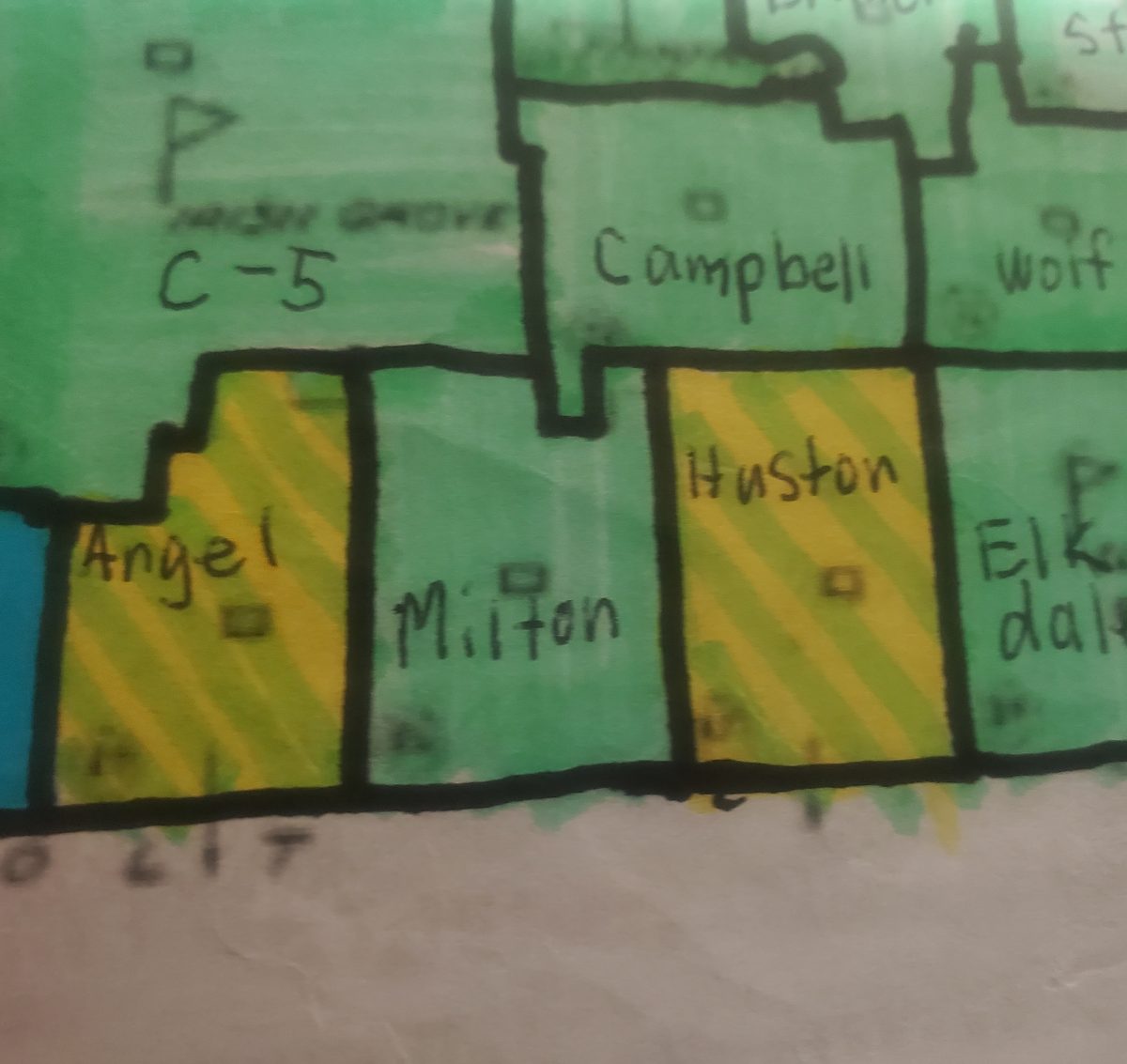
In 1916 there was agitation in the Sharps Grove neighborhood to create a consolidated district to host a rural high school. The proposed district included the Brush College and Mount Hope schools in Holt County. However, in order to create a sustainable enough district it was proposed to include the Houston school district in Atchison County due to its close proximity and the need to create a more substantial district in order to support the rural high school.
There was pushback to the proposal from the beginning. The Atchison County Mail referred to the proposal as stealing from Atchison County, and then County Superintendent Gertrude Thompson asked the state secretary of education to throw out the plan questioning the petitioners within the Houston district. Advocates for the consolidation barely met the minimum number of petitioners in the Houston district, the majority of which lived on the county line.
The proposal passed by two votes with 24 voting for and 22 voting against. However, the Atchison County Board of Education sued the new district stating that proper notification was not given in Fairfax where most Houston residents did their shopping and attended social gatherings. The court ruled in favor of Holt County and Houston officially became a part of Sharps Grove Consolidated District Number 5. However, the Atchison County Treasurer withheld the financial assets for Houston, and Holt County Superintendent of Schools Mary Guilliams sued Atchison County with the court ruling in her favor.
Several attempts were made to pass bonds to build a central high school, all of which failed by large margins. Following the final failed bond vote in April of 1920, the Atchison County Mail referred to the ability for school districts to span across multiple counties as “a freak of a law” and suggested that the consolidated district be abandoned and Houston returned to Atchison County.
Around that same time another consolidation movement had begun in Holt County, this time in the Corning neighborhood. A new school had been built in Corning in 1916, and residents were hoping to equip the school to achieve the status of a first class high school. In 1921, a proposition was made to consolidate Corning, to include the Hogrefe district south of Corning, the Angel school district in Atchison County, and a portion of the Milton district, also in Atchison County.
Once again Atchison County residents were fiercely opposed to the idea of one of their school districts being taken in by another county. Nevertheless, the proposition passed on August 15, 1923, with 131 for and 107 against. A lawsuit was filed two days later in the circuit court alleging that no notice was given to residents of the Milton District that they were included in the proposal, that the election was not conducted according to the law, and was generally a rushed affair. Voter fraud was also alleged as several individuals were seen to have placed multiple ballots in the box.
The evidence included ballots that were folded together, no record was kept of those who voted, and the number of ballots issued was unknown. Additionally, R.B. Bridgeman, the attorney of Holt County and an advocate for consolidation, purportedly gave confusing instructions on how to fill out the ballots and gave a speech the day before in favor of consolidation riddled with inaccuracies.
The case went to trial on November 25, 1923, in which the judge voted in favor of Holt County. Lacking the resources to repeal the ruling, the Angel district and part of the Milton district became part of Corning consolidated school. Unlike with the Houston district, residents of the Angel district did see benefits. Corning was raised to a first class high school in 1924, and children received free high school tuition and transportation.
The arrangement in which Angel and Houston were part of the Sharps Grove and Corning districts continued until 1949. An action of the Missouri Legislature that year required that county boards of education present reorganization proposals to the voters of the county every two years. While most counties opted to wait until 1951, the deadline to present the first reorganization proposal, Holt County opted to present one right away.
One of the proposed districts was Craig R-3 which included the Corning and Sharps Grove districts. Citing that the residents of Angel and Houston naturally gravitated to the Fairfax area rather than Craig, the Holt County board of supervisors proposed to divide the Corning and Sharps Grove districts so that the Atchison County area and its assets were returned to Atchison County and omitted from the Craig district.
In 1950, voters approved the creation of the Craig R-3 School District, which went into effect in August of that year. Angel and Houston were both returned to Atchison County as independent districts. However, unable to support their own schools, both districts opted to pay tuition for the students to attend classes elsewhere. In August of 1951, Angel and Houston both became part of the Fairfax R-III School District, which they both remain part of today.
(Thank you to the Holt County Historical Society for contributing to this article.)


