


Melvin Miles of rural Fairfax, Missouri, recently celebrated his 89th birthday. He has lived on the same family farm his whole life.
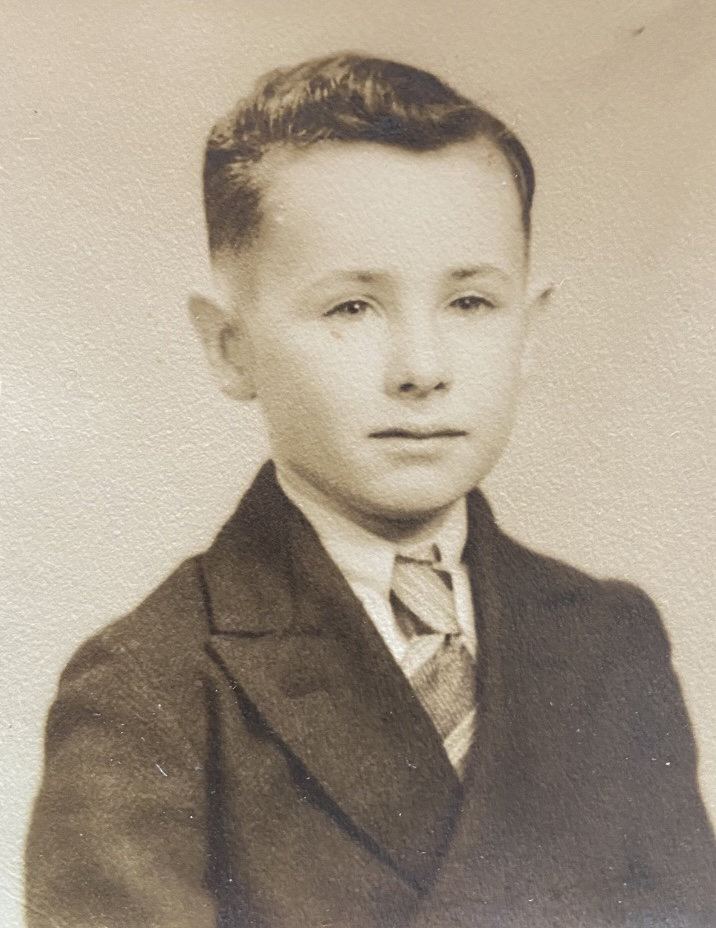
Melvin looks dapper in a suit and tie as a young boy.

Melvin was a corporal tanker in the U.S. Army.
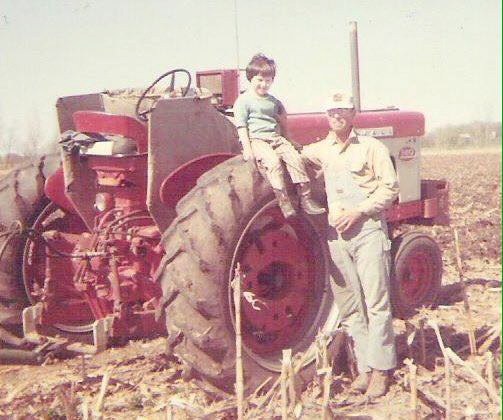
T.J. and Susan took Melvin a drink to the field. Susan said she wore her favorite cowgirl boots!
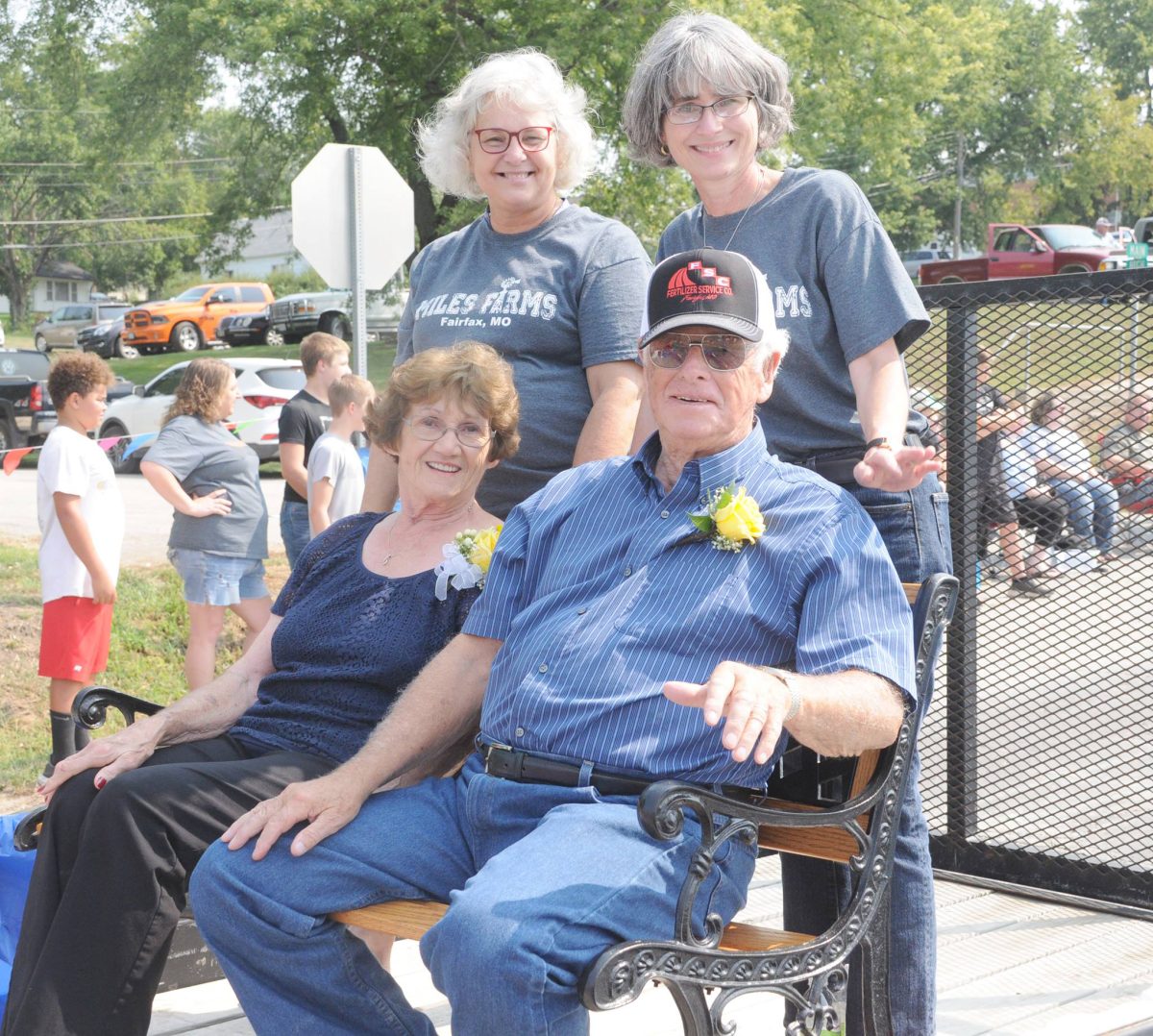
Melvin and T.J. were the Fairfax Fair Parade Grand Marshals in 2018. They rode in the parade with their daughters, Lori and Susan.

The Miles’ farm was named a Missouri Century Farm in 2015.
Finding someone to talk farming in Atchison County is not a rare occurrence. The county is filled with men and women who have toiled through the sands of time by planting and reaping what they sow on their family farms. But finding one who has spent almost nine decades working the same farm ground is a rarity.
Melvin Miles is such a farmer. Born February 18, 1935, Melvin has farmed the same farm ground that has for a century belonged to Miles’ men and women. Melvin’s grandfather, J.H. Miles, started the farm in 1915, and the life of working the ground and the land itself was passed down to Melvin’s father Walter (Beth) Miles and then eventually to him. Melvin, an only child, began farming at age seven. The only nearby child was his cousin, Jimmy Creed, who became one of his best friends. Kids didn’t spend as much time back then galavanting around with friends as living on a farm made working at a young age a necessity. At seven, he planted 160 acres of corn. He and his father used a tractor and a two-horse team and corn planter working 30 acres a day. They would shuck the corn by hand and had elevators in which to store it. They also had hogs and cattle. Even at the age of 89, Melvin is still raking hay, although his grandson, Miles, now runs most of the farming operation. Nowadays, Melvin can be found on the mower throughout the summer and fall, mowing fence rows for his farm and his friends’ farms.
In 1958, Melvin entered the United States Army and was a corporal with his own truck and tank stationed at Fort Knox. He served during a time of peace, but the relationships built with his fellow soldiers were just as meaningful as if they had fought on battlefields together. Instead, they have stood by each other on the battlefield of life, spending the rest of their years traveling across country to visit each other, and to attend the weddings and funerals of their “brothers” and their families. Even the children call the Army buddies surrogate fathers. In May, Melvin and his daughter Lori will be taking an Honor Flight for veterans to Washington, D.C.
Although Melvin has lived in a few different houses, they all have been on the same family land of which they farmed and he has now lived in the same house for 64 years. His daughter, Lori, lives in his grandfather’s house. Melvin and his wife, Thelma J. “T.J.” (Stevens), were married in 1960. They have two daughters, four grandkids, and five great-grandkids, all who live relatively close by.
For Melvin, farming was life; he even had a toy tractor collection. Although he and his wife did take the occasional trip to see his Army buddies or to visit T.J.’s parents and brothers in Florida, he has kept close to home, taking care of his roots that run deep. Melvin joked that his objective has always been to “work, work, work” and attributes staying busy with why he has lived for so long. He doesn’t like to sit idle. Melvin has seen a lot of changes in farming in those 80 plus years. He remarked that the volume of farming has increased greatly, as most people have way more acres now than one farmer ever did. Costs have changed, too. He used to sell a bushel of corn for 30¢. Now, a bushel sells for $4, but a farmer spends more on keeping the farm going and the equipment needed so that $4 isn’t much of a profit as maybe the 30¢ was back then. Farmers around here also don’t have as many hogs and cattle as they used to. From two rows to 36 rows and cultivating a crop two or three times to now planting and then not tilling it at all are some other changes he’s seen.
Melvin’s farming duties may have slowed, but he’s used that time to enjoy spoiling his great-grandkids, four of whom live just down the road and come visit regularly. He’s also a deacon at the Fairfax Baptist Church, where he has attended since 1946. Melvin is one of many who make Atchison County such a successful farming community. On each farm, one will find a man or woman or both who have dedicated most of their lives to a practice that by some instances is no longer “popular,” but is still such a necessity to keep the world going. These dedicated workers can not be overlooked and we are so grateful to Melvin and the others for growing our food, feeding us in nutrition and tradition, and cultivating the ideals that remain so important to us “small town” folk.


