


SAVINGS STRATEGIES FOR WEDDINGS
The question was popped; the engagement ring presented. What’s the next step on the road to the wedding? Saving should definitely be on couples’ minds.
A wedding is likely the most costly party couples will ever throw. According to The Knot’s 2019 Real Weddings Study, the average cost of a wedding in 2019 was $33,900. There are many different costs associated with weddings. Some are predictable, while others are unexpected.
Investopedia says the vast majority of couples budget too little for their weddings and also end up spending more than they had planned. Various strategies can make it easier to save for a wedding and avoid a post-wedding financial hangover.
Get informed
It’s impossible to budget for a wedding and ultimately save without knowledge of what services and items cost in the region where you live. A wedding in New York City will be expensive, while a wedding in Mississippi will cost a lot less, indicates SuperMoney’s guide to wedding costs.
Conduct some research and find out what photographers, florists, transportation providers, reception halls, and wedding wardrobe vendors charge for common services. This will paint a vivid picture of what a wedding may cost in your area.
Flesh out the budget
Once you have gathered estimates, you can then figure out a financial goal. This also is when you can determine where to rein in spending and where you might want to splurge. If having a video memory of the wedding is not a top priority, you can skip videography services. If you have a special flower that you like, you may want to budget more for that bloom even if it isn’t in season.
Set up a dedicated savings account
One of the easiest ways to save for big-ticket items like a wedding, home purchase or other financial goals is to use an automatic savings account that may be available through your bank or employer. An automatic savings plan will pull a set amount from a personal checking account into a savings account through auto-draft. The bride and groom can link individual checking accounts to one savings account to contribute jointly.
Avoid overspending
An analysis of your spending habits will likely reveal areas where you can scale back so you can devote more funds to wedding savings. Do you need a takeout coffee in the morning or can you brew a pot at home? Might you be able to scale back on streaming services? Do you feel comfortable buying less expensive store brand groceries over name brands? Small cost savings can quickly add up.
Add up gifts
Factor in deduction of expenses that other people will commit to covering for wedding expenses, but only if you have concrete confirmation. A parent may host the rehearsal dinner. One’s relative may offer to pass down an antique wedding gown to wear. But rather than simply removing these gifts from your savings calculations, keep them as a safety net to put toward unforeseen expenses.
Saving for a wedding can be challenging. But various strategies can help couples plan their dream weddings without breaking the bank.
THE RISE OF THE MICROWEDDING
The effects of the COVID-19 pandemic have been far-reaching. People from all walks of life have had to confront the pandemic and the changes it wrought, and many of those changes could have some staying power.
Wedding industry experts note that one of the more noticeable and potentially long-lasting effects of the pandemic has been the rise of microweddings. The 2020 Real Weddings Study (COVID-19 Edition) found that 58 percent of couples who planned to get married in 2020 ended up reducing their guest list by a significant percentage. The average reduction was 41 percent, and some suspect small ceremonies may be the new normal in the years ahead.
Microweddings
Microweddings are not necessarily a new trend, as couples have always had the option of getting married with only a small number of family and friends in attendance. However, microweddings could be an emerging trend, and cost may have a lot to do with that. The Wedding Planner Institute notes that microweddings cost anywhere from $1,600 to $10,000, though the group notes that most microweddings fall somewhere in the middle of that range. A 2020 survey from TD Ameritrade found that 47 percent of respondents felt that cost of living was the biggest threat to their financial security and long-term investments. Engaged couples confronting the well-documented post-pandemic increase in cost of living, including an unprecedented rise in housing costs, could see expensive weddings as luxuries they simply can’t afford. Microweddings could be viewed as a cost-effective way to combat the rising cost of living that still allows couples to share their big day with their closest friends and family members.
The WPI has urged wedding planners to offer microwedding packages in an effort to capitalize on this emerging trend. Data from The Wedding Report indicated that the total number of weddings would rise to 2.77 million in 2021, an increase of roughly 650,000 over the yearly average. Even if only a fraction of couples who tie the knot in 2022 opt for a microwedding, a preexisting microwedding package can help wedding planners secure their business. Couples who opt for microweddings may do so to save money, but also to avoid the effort and save the time required to plan more lavish affairs. Such couples may be especially excited to work with wedding planners who can plan their weddings regardless of how small the affair may be.
What goes into a microwedding
Nothing should be off the table when planning a microwedding. The fewer the people who will be there, the more freedom planners and couples may have. The WPI notes that microweddings afford planners and couples the chance to get personal in ways that may not be possible when organizing larger affairs. Planners can focus on small details and allow couples to make their ceremonies and receptions as personal as they would like. Couples who prefer microweddings tend to emphasize minimalism, so keeping things simple is something to keep in mind when planning microweddings.
Microweddings are an emerging trend that make for a realistic option for couples and the people they hire to help them plan their big day.
PICTURE PERFECT WEDDING DAY PHOTOGRAPHY TIPS
Few things document weddings more effectively than photographs. Carefully curated wedding albums and portraits hung on walls serve as daily reminders of a couple’s special day.
Photography is often left in the very qualified hands of professional photographers. However, couples can pitch in to make their photos really pop. These picture pointers from industry insiders can help couples put their best smile forward.
Leave ample time
A carefully orchestrated timeline can ensure photos are the best they can be. Why? Because a couple who is relaxed and not overwhelmed will notice that attitude translates to their photographs. When planning wedding timelines, couples should leave ample opportunities for getting dressed, chatting with the wedding party and going through various photography settings to grab great photos, advise the experts at Martha Stewart.
Put together a short list
The photographer will have his or her ideas of which shots to cover, but a couple with specific goals in mind should relay that information to their photographer. For example, if a grandparent is getting up in years, request some solo photos of that person so you can look back on happy times together. Certain couples want to be snapped posing with a beloved pet. Putting that on the list helps ensure it will happen.
Enlist a family photo coordinator
If the photographer does not have his or her own assistant, recruit someone who is assertive to help wrangle everyone for the family shots. Attempt to get family photos when family members are relaxed but not too far rumpled by dancing or having a good time.
Play your style safe
A wedding day is not a time for the bride or groom to try a dramatic new style, according to photographer Amanda Lamb. Resist the urge for a daring cut or color. It’s also likely not the place to try out new facial hair or heavy makeup. A couple unaccustomed to the way they look may be shy in front of the camera.
Delve into the details
Prepare wedding details, like gowns, shoes, accessories, etc., in advance to save time once the photographer arrives, suggests Desi Mendoza, a pro from Dez and Tam Photography. Invest in a beautiful hanger for the wedding gown as well, because you may want to photograph that on its own.
Learn to pose
Couples can practice posing in front of mirrors to get a feel for body positions that put them in their best light. A photographer’s advice in regard to posture is invaluable as well. Create space between arms and the body and learn how to angle the body so you look your best.
Photos will capture wedding day memories forever. Couples can put themselves in the best positions for success by following some photography guidelines.
THREE TOOLS FOR KEEPING WEDDING GUESTS INFORMED
Weddings give couples an opportunity to share the joy of joining their lives together with a host of friends and family members. Guests liven up the party and help make the celebration that much more memorable.
According to The Knot 2019 Real Weddings Study, the average wedding in the United States hosts 131 people. Data indicates this number has been slowly decreasing over the years, after the average wedding size reached an all-time high of 153 in 2007. No matter how big or how small the guest list, keeping guests informed of what’s happening regarding the upcoming nuptials is a courtesy couples can provide. Couples can explore various avenues for keeping guests informed and ensuring they’ll be able to take part in the festivities.
Save-the-date announcements
Save-the-date announcements have become an increasingly popular component of wedding planning. Instead of waiting on the wedding invitation, which traditionally arrives one or two months prior to the wedding itself, save-the-date cards provide guests with an advanced advertisement of the celebration to come. According to the photo and invitation specialists at Shutterfly, it’s customary to send save-the-date notes around six months before the wedding. For a destination wedding, which will require extra travel plans, an eight- to 12-month advance can be helpful.
Save-the-date cards generally have basic information, including the wedding date and the venue. Many will feature a photo of the couple as well. If you’re planning on sending save-the-date announcements, coordinate with your photographer to have a photo taken exclusively for these cards.
Wedding website
Couples are increasingly embracing technology as they plan their weddings. Brides magazine states that, during the typical 15-month engagement period, 48 percent of couples will launch a wedding website. A wedding website is a versatile tool that can help answer questions that guests may have. The website can spell out specifics, including dress code, whether children are invited, the names of wedding party participants, overnight accommodations, transportation providers, and even restaurants near the hotel for a quick bite between ceremony and reception.
Wedding websites also can be used as fun ways to keep guests engaged. “Throwback Thursday” photos or funny memories and anecdotes can be included.
Video conferencing apps
As the world continues to adapt in the wake of the COVID-19 pandemic, video conferencing applications like Facetime, Zoom and Microsoft Teams enable people involved in the planning process to routinely “gather” and go over details about the wedding, helping to limit in-person meetings as much as possible. These apps also can prove invaluable when conferring with wedding vendors, such as florists or musicians.
You also can schedule smaller meetings with specific guests who may be playing key roles in the wedding, such as those giving speeches, doing readings, escorting guests, or serving in other capacities.
Certain resources can help couples keep guests informed about what’s to come in regard to their weddings.
EXPLORE VARIOUS WEDDING STYLES DURING PLANNING
Every wedding is different, even if many share some common components. As couples plan their weddings, learning about some popular wedding styles can help them create a ceremony that suits them.
Classic wedding
Classic weddings are the storybook traditional weddings that many people dream about for years. Key elements include a tuxedo for the groom and a white gown for the bride. Formal attire is reserved for the rest of the wedding party. The ceremony is conducted in a place of worship before everyone retires to a fancy catering hall for the reception. Traditional weddings also may include the time-honored customs like toasts, cake cutting, bouquet toss, and parent-child dances.
Beach wedding
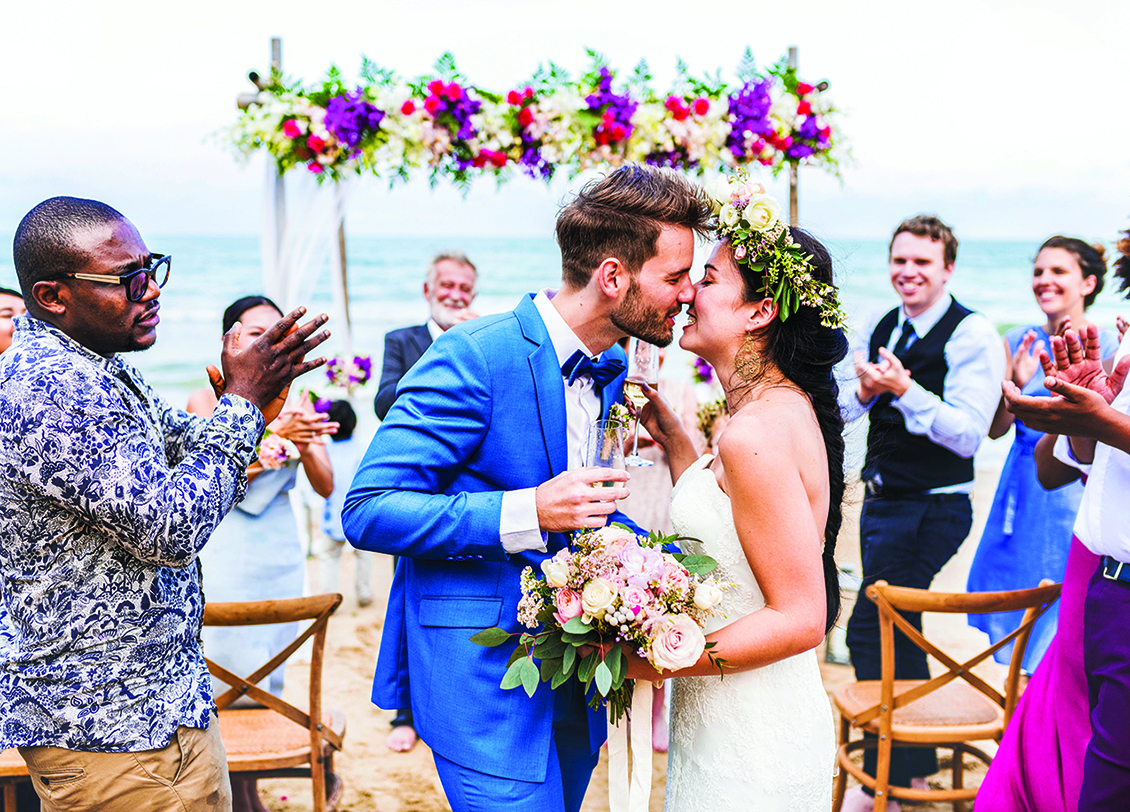
Beach weddings often are casual, laid back affairs. Dresses may be less structured and flow with sea breezes, while guys may even don shorts with linen shirts or jackets. Guests can expect the party to be much more free-flowing and the traditions of classic weddings may not be part of the celebration.
Bohemian wedding
Free-spirited individuals may dive head first into a bohemian style wedding. According to wedding planner David Tutera, a boho wedding is casual and comfortable. It tends to come off chic but appears that way with minimal effort. Decor is typically humble and blends harmoniously with nature. A boho wedding may take place outdoors or in another less traditional venue, such as a farmhouse or botanical garden. Wedding party attire may be mismatched and showcase each person’s individual style.
Modern wedding
Brides and grooms who crave contemporary and current trends may prefer a modern wedding. Graphic color schemes, clean lines and minimalistic flowers might be part of a modern wedding. Attire may be angular and edgy, and the venue may run the gamut from sleek museum to a city rooftop.
Destination wedding
Couples who love to travel and don’t want to worry about the minutiae of wedding planning may find a destination wedding is a good fit. Destination weddings last more than one day and focus on relaxation, activities and lots of fun. Destination weddings tend to be less formal and less traditional than classic weddings. Due to the remote locations, destination weddings also can be smaller and more intimate, as many invitees may be unable to attend. Yet those who can attend often get to enjoy tropical islands or mountain retreats.
Wedding styles are as unique as the people getting married. Choosing a theme that has the right feeling can help couples make the most of their special days.
HOW TO TAKE THE HECTIC OUT OF YOUR WEDDING DAY
Weddings are among the most complex events many people will ever plan. Couples often try to go the extra mile in an effort to make the day memorable for themselves and their guests. That pressure can make a wedding day feel a little frenzied. Thankfully, there are various ways to ensure the vibe of the big day is happy and not hectic.
Hire a wedding planner/coordinator
Leaving the nitty gritty to a professional wedding planner takes a lot of pressure off of couples. The renowned wedding resource The Knot says wedding planners are clued into everything there is to know about a wedding and they can be tapped to take care of just about anything on couples’ to-do list.
Consider a package deal
All-inclusive resorts are popular vacation spots because variables like entertainment, lodging, food, drinks, and more is all taken care of, leaving vacationers with little to do other than show up and relax. Couples can apply that same approach on their wedding day. Host the ceremony and reception at the same site, which takes the potentially problematic issue of getting guests to and fro out of the equation. Some venues may even provide in-house vendors like photographers and florists. Such vendors’ familiarity with the venue reduces the risk of surprises that can derail wedding day schedules.
Pick your priorities
Avoid getting bogged down on a million details by making a list of your priorities when planning. Couples can revisit this list a couple of days before their wedding so they remember what’s most important to them on the big day. This refresher can ensure couples don’t get too concerned if minor issues arise during their big day, helping them remain calm and keeping a focus on all the fun to be had during the day.
It’s easy for couples to feel a little overwhelmed on their wedding day. Some simple strategies can take the hectic out of couples’ wedding day and ensure they keep their focus on one another and their loved ones.
TIPS FOR FINDING THE RIGHT WEDDING VENUE
Wedding planning requires couples to make many decisions, including where the wedding will take place.
A couple’s wedding day is typically broken into two parts: the ceremony comes first, and the reception follows soon after. Depending on couples’ preferences and religious beliefs, ceremonies may take place at a house of worship or another location that is separate from the reception venue. In some instances, couples may choose one location for both the ceremony and the party to follow. Wedding venues are where the bulk of the day will unfold, and couples can consider these four tips to find a venue that suits their needs.
1) Consider your theme and wedding style. Most couples know which sentiments they want to convey during their weddings. The venue should match the theme so the entire wedding will feel connected to the space. A modern wedding, for example, will be at home in an art gallery or warehouse. A wedding with natural elements may work better on a ranch or in a botanical garden. Zeroing in on the wedding style helps narrow down potential venue options.
2) Assess the budget. A couple may find what seems to be the perfect venue, only to realize that the cost of the space doesn’t fit their budget. Ampersand Travel says the venue accounts for the most significant wedding expense, at an average cost of $9,000. Finding a venue that will maximize dollars spent involves looking at what is included. Rentals for chairs, linens, lighting, a dance floor, and other extras can quickly add up. Couples should have a set limit they’re willing to spend on the venue and let that dictate the location.
3) Availability of the location. When a couple wants to get married may determine their venue options, especially if they’re planning on a budget. September and October are now the most popular months to get married, so venues will book up quickly during that time of year. Those who have their hearts set on specific days will have to begin the search earlier than couples with no attachment to a particular date. Concessions may need to be made if a certain date is a must.
4) Estimate the size of your guest list. Price, date and style will factor into wedding venues, but the number of guests also is a major consideration. A trendy restaurant may seem like the perfect locale, but it must be able to accommodate everyone on the guest list. Couples should sit down with their families and come up with a list of potential guests and look for a venue that can accommodate everyone.
Couples also should visit potential venues in person to see which, if any, details might be missing from online or magazine advertisements. A host of factors, including accessibility, should be considered when looking for a venue.
Finding the right venue requires careful consideration of various factors that are unique to each couple.
DOS AND DON’TS OF CARING FOR WEDDING AND ENGAGEMENT RINGS
Jewelry is a key component of weddings. The financial resource CreditDonkey notes that, in the United States, the average amount spent on an engagement ring is $5,500, while Canadians spend an average of $3,500. Jewelry costs can add up, especially when adding in the cost of wedding bands, which can cost as much as $1,000. The cost of jewelry only underscores the importance of learning how to care for it and preserve its value.
The best way to maintain jewelry depends on the makeup of the rings. The online jewelry guide Jewelry Notes says gold rings without gemstones can be cleaned effectively with only soap and water. Simply prepare a solution of lukewarm water and mild dish soap in a small bowl. Soak the rings for 20 to 30 minutes. Use a soft brush or cloth to clean the jewelry of dirt. Rinse the residue under clean water.
Rings with diamonds can be treated similarly with a mild soap-and-water solution. The Diamond Information Center also says to soak the diamond ring in equal parts cold water and ammonia for half an hour and let it air dry. Brand name jewelry cleaner also is another good option. This method only should be used with diamonds; ammonia can’t be used with other gemstones.
Maintaining jewelry also should include twice yearly visits to a jeweler who can check the prongs and make sure the setting is not loose; otherwise, the diamond can become dislodged, according to Martha Stewart Weddings.
Avoid touching diamonds and other gemstones as much as possible when putting rings on and taking them off. Precious stones often are magnets for dust, dirt and body oil, according to Taylor Lanore, diamond consultant and engagement ring designer for Lauren B. Fine Jewelry and Diamonds. Grab the ring by the band.
Use discretion when wearing rings while engaging in hands-on activities. Activities like cleaning dishes, moving furniture, gardening, or diving through waves at the beach warrant caution; otherwise, you risk damaging or making jewelry unnecessarily dirty. Store the ring in a safe location until you can safely wear it again.
One of the most important steps to safeguard wedding and engagement rings is to insure the jewelry. The description of the ring, its cut, carat weight, metal, and other information offered through a certified independent jewelry appraisal will be needed to insure the ring. Take a close-up photo of the jewelry as well. Other items like laser inscription or a home security system can qualify jewelry owners for discounts on insurance. Consumers also can add a jewelry rider to a homeowner’s or renter’s insurance policy.
These are some ways to care for wedding jewelry. Always consult with a jeweler before attempting to clean items made of various materials.


