


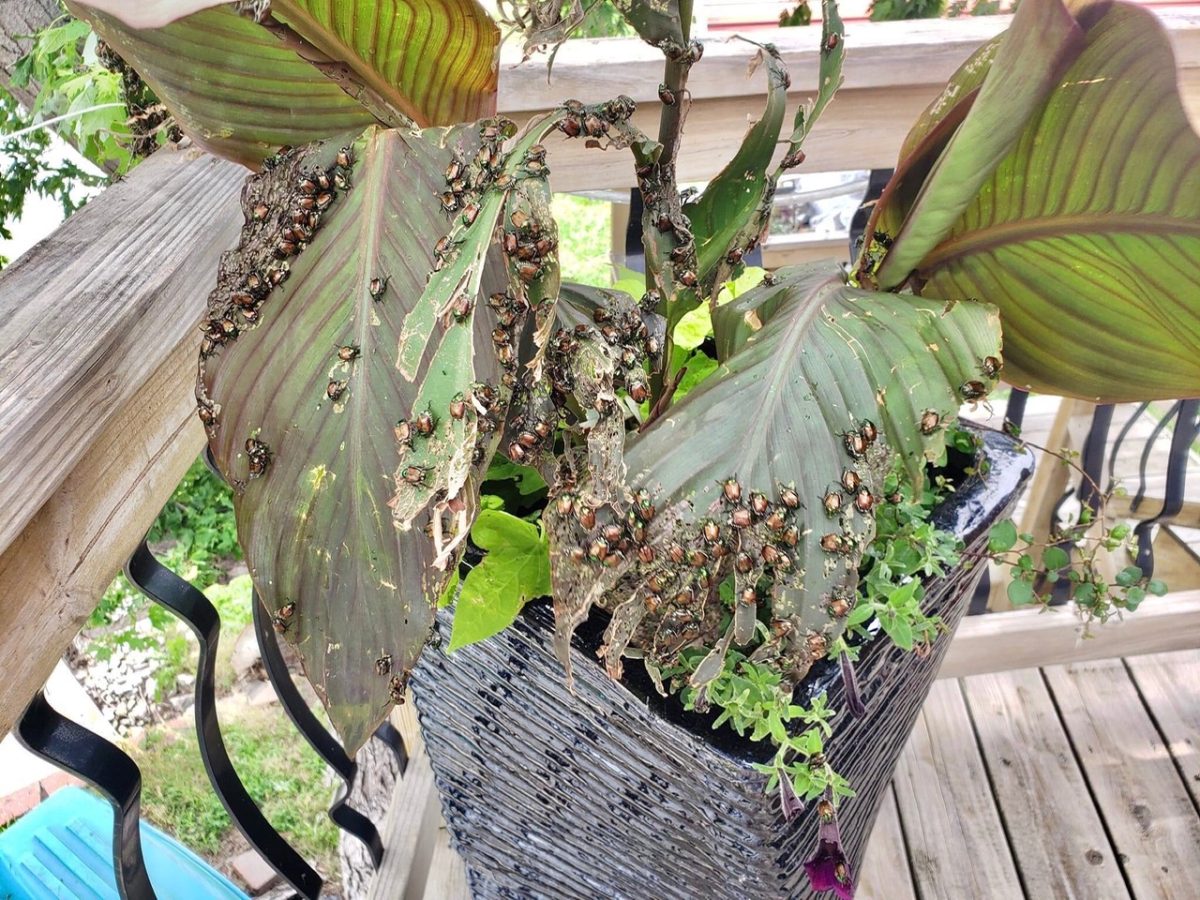
Japanese beetles are about one-half inch in length with metallic green color with copper-brown wing covers. They have white tufts of hair on the edge of the abdomen. They are currently emerging and have one generation. However, because of stretched period of emergence, populations may last into August.
Japanese beetles can feed on corn and soybean, but economic thresholds should be followed as when an insecticide application is made, Japanese beetles will move back into a treated field within a week. Soybean economic threshold is 20% defoliation in the reproductive stages. The economic threshold is 30% before the reproductive soybean stages.
Corn economic threshold is when three or more Japanese beetles per ear, silks have been clipped to less than ½” and pollination is less than 50%. Control with insecticides is effective.
Japanese beetles feed on more than 300 plants. They will feed while other pollinators are present visiting flowers. To avoid injury to pollinators, spray late in the day near dusk. Avoid using Sevin, acephate and pyrethroids which are very toxic to bees.
Organic control options are waiting until evening and knock beetles off and place into a bucket of soapy water to drown them.
For more information, contact Wayne Flanary, Field Specialist in Agronomy, telephone 816-270-1691, University of Missouri Extension.


