


by Cindy Walker Burton
Hear that? It’s an inevitable sound of spring. No, it’s not the roar of lawn mowers or birds chirping merrily. Nor is it the sound of refreshing rain showers or the cheers resonating from a track meet. Here’s a hint: Bzzzzzzz! The fuzzy buzzy bumble bee is – well – busy as a bee! Bombus is the technical name and pollinating is its claim to fame.
• Buzzworthy Bumble Facts. There are 250 species of bumbles worldwide and thousands of buzzin’ cousins in the Apidae family. The queen bee lays eggs in batches of 4 to 16 on balls of pollen, covers them with wax, incubates them to 86 degrees, and mature adult worker bees emerge in 4-5 weeks with a lifespan of 28 days.
• Bumble Jumble. Only females have stingers. Queen bees can survive underwater for several days. Seventy per cent of bumbles live underground and shiver to keep warm. Bumbles eat their own honey when pollen is not readily available. Their wings beat in a figure eight pattern 130-240 times per second and they can reach altitudes of 29,000 feet! Bumbles have five eyes (two compound eyes and three tiny eyes on top). Their favorite color of flower is blue or violet. Bumbles are highly intelligent (spelling bee?), are capable of learning, and exhibit playful behavior.
• Please Save the Bees! In North America, bumble bees are in decline. Franklin’s Bumble Bee is critically endangered and two species have gone extinct in the United Kingdom. Why save bumble bees? Seventy-five per cent of crops require pollinators, they maintain healthy ecosystems, and they are bioindicators of environmental health.
• Keys to Save Bees. Plant native species (asters, goldenrod, lavender). Create nesting habitats (leave leaf litter or untilled garden patches). Eliminate fungicides and insecticides. For more information, visit the Xerces Society, The Bee Conservancy, Save The Bees Organization, or pollinator.org.
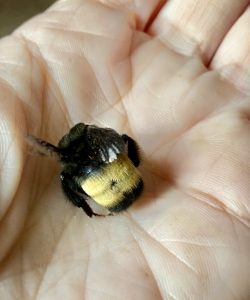
• Bee-lieve It or Not. In the photo below, I stumbled upon a bumble bee lying motionless on the sidewalk, assuming it was dead. Within seconds, it zipped away to pollinate a dandelion. Isn’t that the bee’s knees?


